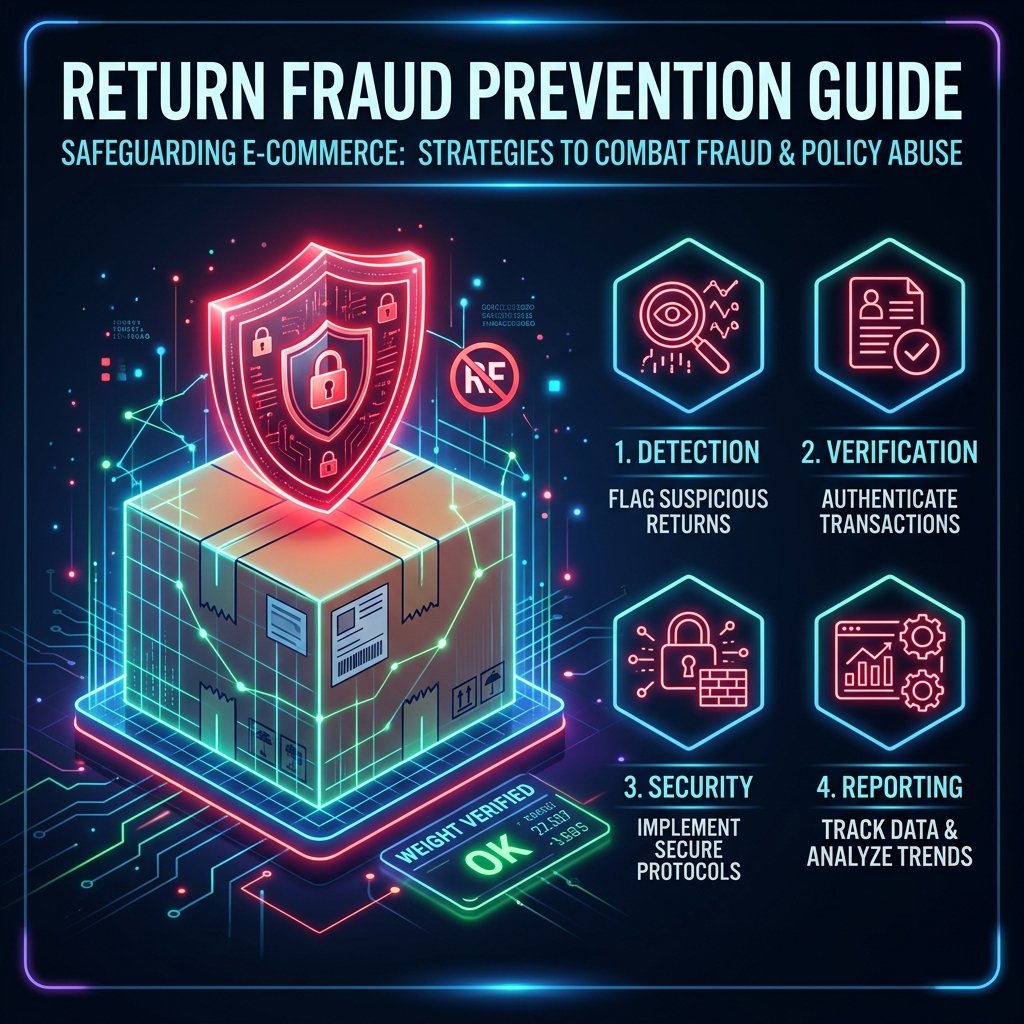
Return fraud is a multi-billion dollar drain on e-commerce operations. If your support team is trained to issue refunds immediately upon a customer providing a tracking number or complaining about a package, you are likely hemorrhaging cash to professional fraud groups, package thieves, and opportunistic buyers.
In e-commerce, customer support is your frontline defense. This playbook details how to spot common return scams, write bulletproof policies, and train your agents to handle suspicious returns like loss prevention professionals.
To stop return fraud, your team must understand the tactics scammers use to exploit standard shipping workflows.
┌─────────────────────────────────────────────────────────────────┐
│                           RETURN SCAMS                          │
├───────────────────┬──────────────────────┬──────────────────────┤
│    THE FTID       │    THE EMPTY BOX     │     WARDROBING       │
│  (Fake Tracking)  │                      │                      │
│ Label address is  │ Scammer sends a      │ Items purchased, used│
│ modified so it    │ brick or cheap item  │ for an event/need,   │
│ ships to a local  │ instead of the actual │ and returned as if   │
│ business nearby.  │ expensive product.   │ brand new/unused.    │
└───────────────────┴──────────────────────┴──────────────────────┘When a customer contacts support demanding a refund for an item that has not been received at your warehouse, run this verification checklist:
Never trust a “Delivered” tracking status blindly. Open your carrier shipping portal (UPS, FedEx, DHL, USPS) and check the actual drop-off weight registered at the carrier facility.
For high-value items, shipping carriers capture a signature or log GPS coordinates at the exact point of delivery.
If a customer claims a product arrived damaged or defective, do not immediately ship a replacement.
Accusing a customer of fraud is a legal risk and a guaranteed way to escalate a situation. Instead, frame the investigation as a “carrier dispute” or “security audit.” This allows you to hold the refund while staying professional.
“Hi [Customer Name],
I’m looking into the status of your return for order #[Order Number].
I see that the return shipping label was scanned by the carrier. However, our warehouse team has flagged a discrepancy: the carrier drop-off receipt logs the package weight as [Drop-off Weight], while the [Product Name] has a weight of [Product Weight].
To help us investigate this issue with [Carrier Name], could you please provide a photo or copy of the physical drop-off receipt you received from the carrier station? Once we verify the weight details, we will proceed with the next steps of your claim.
Best regards, [Agent Name]“
“Hi [Customer Name],
Thank you for reaching out. I see that tracking for your return #[Tracking Number] shows as delivered to [Zip Code].
However, our receiving team has no record of this package entering our warehouse. We have initiated a formal trace investigation with [Carrier Name] to obtain the GPS coordinates of the delivery drop-off.
This process typically takes 3-5 business days. We will hold your refund request open and update you the moment the carrier completes their audit.
Thank you for your patience, [Agent Name]“
To keep your operational work low, design your policies to filter out scammers automatically: